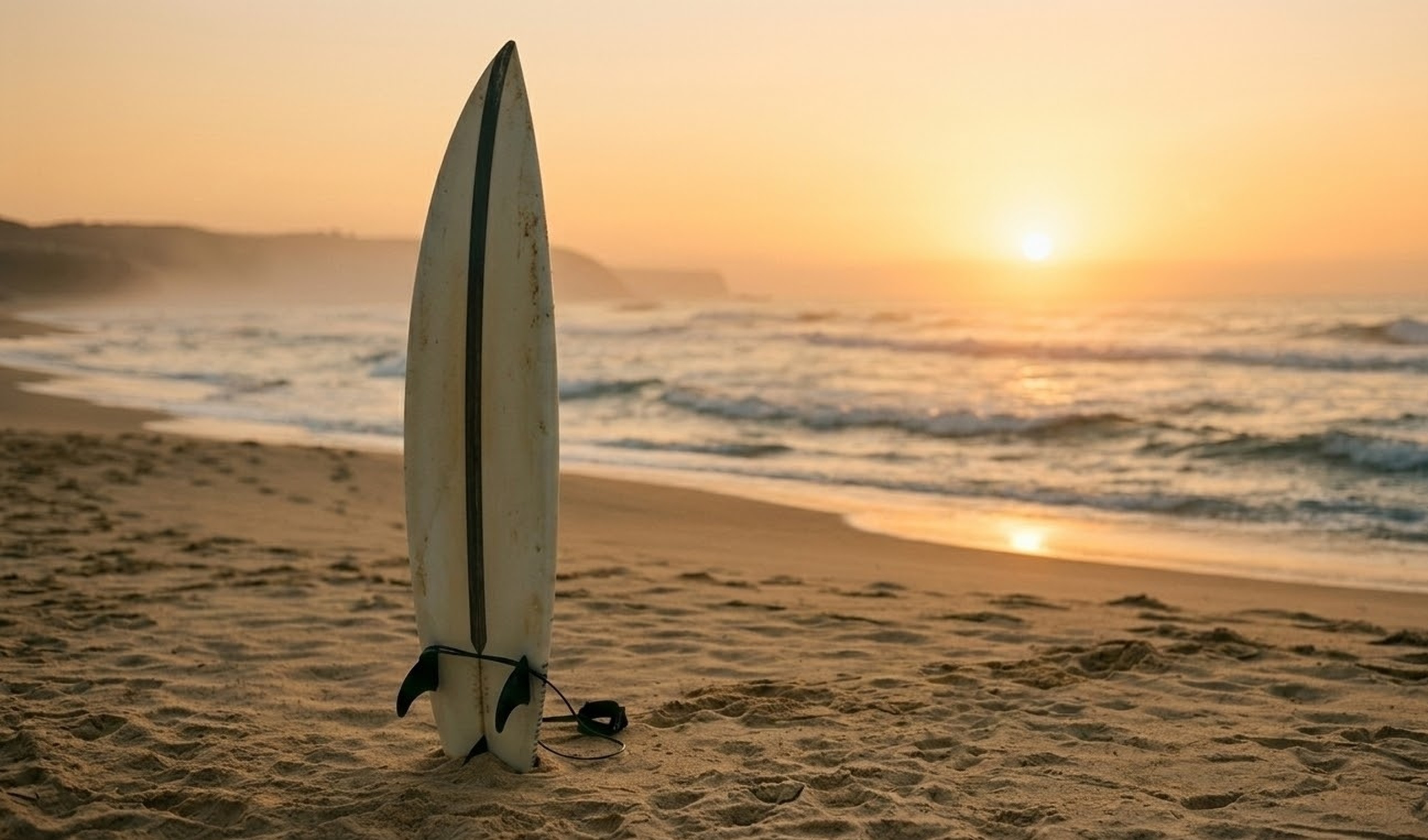
Active beachgoers face a trade-off that shouldn't exist: participate fully in the water, or protect your belongings. That tension — between freedom and vigilance — interrupts the exact emotional experience people go to the beach to find. Our team set out to understand the opportunity space and determine whether a viable product concept existed in this gap.
The Target: Active Beachgoers, 28–35
We defined our target segment as full-time employed individuals ages 28–35 who live near the coast, earn middle to upper-middle incomes, and spend their discretionary income on leisure. Psychographically, they value freedom, full participation, and shared experiences. They see the beach as a mental reset — and peace of mind is essential to that escape.
Behaviorally, these people visit the beach frequently, participate in water activities for extended periods, and rely on improvised security methods: hiding items under towels, asking strangers to watch their stuff, or designating a rotating "guard" from their group.
The Fixed Object Gap
The competitive landscape revealed a critical insight we named the Fixed Object Gap. The big names in beach security — SAFEGO, Master Lock — all depend on tethering to a heavy chair or anchored umbrella. For an active beachgoer who shows up with a towel and a surfboard, these products are useless.
| Product | How It Works | Core Friction |
|---|---|---|
| SAFEGO | Hard shell box, 17' steel cable | Requires heavy chair or umbrella to lock onto |
| Master Lock 5900D | Small safe with wrap cable | Cable too short to reach larger posts |
| TanSafe Decoy | Sunscreen bottle shell | No actual lock — relies on thief not looking |
| Beach Vault | Screw-down container buried in sand | High effort, prone to mechanical failure from grit |
| Waterproof Pouches | Sealed bag worn while swimming | Annoying during water activities, unreliable seals |
The perceptual map made the white space obvious: there's a dead zone in the top-right quadrant where high security meets high convenience. Every existing product forces a trade-off between the two. No one occupies the space we called Convenient Standalone Security.
Interview Insights
We conducted consumer interviews that surfaced four key themes. First, peace of mind is fragile — even when theft feels unlikely, unattended belongings create a persistent low-level anxiety. Second, the decision to enter the water is the emotional peak of conflict, where spontaneity collides with responsibility. Third, when someone stays behind to guard the group's stuff, they don't just miss out — they feel sidelined. Fourth, security is social: losing something creates guilt and tension that ripples through the whole group.
"Even my towel, I have some anxiety of someone taking it."
The Job to Be Done
We framed the opportunity through the Jobs to Be Done lens. The truth is simple: people want a relaxing and fun time at the beach. The need: a safe and convenient way to secure their belongings. The friction: current solutions are unreliable and still leave them worrying. The job: give people peace of mind when leaving their belongings at the beach unattended.
The market for beach security is fragmented with no dominant solution — 30+ Amazon listings for lockable beach bags, none with meaningful market share. The opportunity is to create a new category: a standalone security product that doesn't depend on fixed objects, doesn't require excessive setup, and lets the user walk into the water without thinking twice. Gate 2 will move into concept development and prototyping against this brief.